Need seals fast?
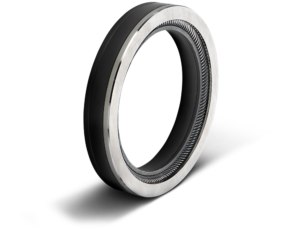
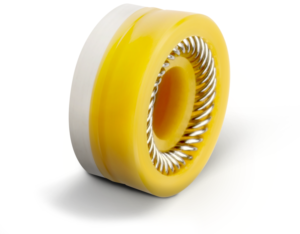
Bal Seal® spring-energized seals deliver superior sealing performance in applications where conventional O-rings and lip seals fail. Our seals combine precision-machined polymer jackets with canted coil spring (and other types of spring) energizers to provide reliable protection in extreme temperatures (-425°F to +600°F), high pressures, and chemically aggressive environments.
Trusted by OEMs in aerospace, medical, semiconductor manufacturing, and energy, oil and gas, Bal Seal® technology extends service life by up to 150% over standard seals while reducing maintenance and improving equipment uptime.
Why Choose Spring-Energized Seals?
Extended Service Life
Spring energizer maintains constant sealing force as the seal jacket wears, delivering up to 150% longer service than conventional seals
Wide Temperature Range
Operate reliably from -425°F to +600°F, depending on jacket material, geometry, and other factors
Chemical Resistance
PTFE and specialty polymer jackets resist aggressive media that degrade elastomeric seals
Low Friction
Jackets made from materials with reduced friction coefficients minimize wear and power consumption in dynamic applications
Tolerance Compensation
Independent spring energizer coils compensate for surface irregularities and dimensional variations, reducing the formation of leak paths
High Pressure Capability
Handle pressures up to 10,000 psi and beyond with appropriate backup device designs
Spring-Energized Seal Components
Seal Design
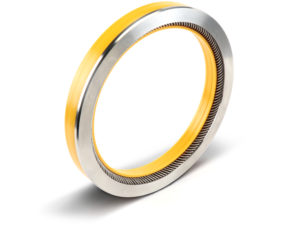
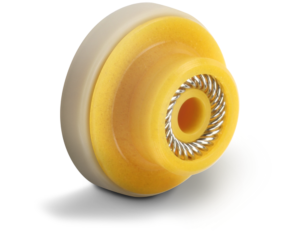
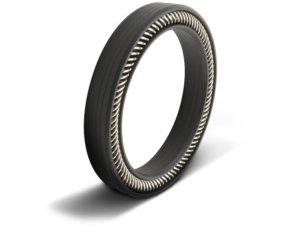
A spring-energized seal typically consists of two basic components: the seal jacket and an energizer. The energizer is inserted into the jacket, along the cavity between the seal’s static and dynamic lip.
For applications requiring an added level of protection, an engineered metal locking ring can be integrated into the spring-energized seal design. The locking ring prevents rotation of the seal in the hardware, and it promotes consistent sealing contact under thermal cycling conditions. Backup rings made from PEEK and other materials can be designed to integrate with the seal jacket geometry, or they can be provided as separate parts.
This two-component design enables precise customization of sealing force, friction characteristics, and chemical compatibility for each application’s unique requirements.

Spring-Energized Seal Profile
How Spring-Energized Seals Work
A spring-energized seal usually relies on interference for retention in the housing and to apply pressure at the sealing surface. During installation, the static seal lip is compressed into the housing bore, and the dynamic lip is stretched over the dynamic surface (piston).
The compression load applied to the seal causes a reactive force generated by the compressed energizing spring. This precise interference between the sealing lip and sealing surfaces establishes a barrier that prevents the media from leaking past the seal. Effective sealing requires some contact stress between the seal lips and the hardware. This stress, and the resulting friction, can be controlled by adjusting the jacket geometry, material, and energizer force.
Seal interference: pre-installation vs. operation
Areas of contact stress in seal/hardware interface
Service Life & Performance
The spring-energized seal is capable of providing longer service compared with conventional (non-energized) polymer or elastomeric seals. This is because contact pressure at the sealing lip remains high throughout the life of the seal. Even as seal materials wear, the energizer compensates for tolerance variations across a wide working spring force deflection range to maintain constant and even force across the seal lip, maintaining sealing pressure. This inhibits the formation of leak paths, which results in fewer maintenance intervals and increased equipment uptime.
In addition to promoting even wear and maintaining constant sealing contact throughout its service life , the spring-energized seal also reduces media contamination by incorporating chemically compatible, wear-resistant materials. This reduces the possibility of premature degradation, and minimizes the potential for seal material “shedding,” which could contaminate processes and result in quality issues.
Application Configurations
The spring-energized seal is commonly employed in both dynamic and static applications. More specifically, it can be designed to protect against leakage and damage in reciprocating, rotary, oscillating and static service. Although it is often used in a housing-mounted configuration, the seal can also be mounted on a piston or shaft.
Spring-Energized Seal Applications
A spring-energized seal is an ideal choice for operating environments with challenging pressures, temperatures, speeds, and aggressive media. It can outperform elastomeric seals and improve the performance and reliability of equipment used across a wide range of industries and applications, including:

Aerospace Sealing Solutions

Actuators, valves, landing gear systems, environmental control equipment, and propulsion components in commercial and defense aircraft.
Medical Device
Seals

Surgical power tools (>15,000 RPM), drug delivery pumps, diagnostic equipment, and analytical instruments. Precision-machined from FDA-compliant materials with full traceability.
Semiconductor Manufacturing Seals

Vacuum chambers, chemical delivery systems, wafer handling equipment, and precision positioning stages. Ultra-clean PTFE and PEEK materials maintain vacuum integrity and resist process chemical attack.
Oil & Gas Sealing Applications

Downhole drilling equipment, wellhead systems, subsea valves, and production equipment. Reliable sealing at pressures exceeding 10,000 psi* in corrosive media.
Industrial Equipment Sealing

Hydraulic actuators, reciprocating compressors, metering pumps, and process control valves across diverse manufacturing industries.
Seal Jacket Materials
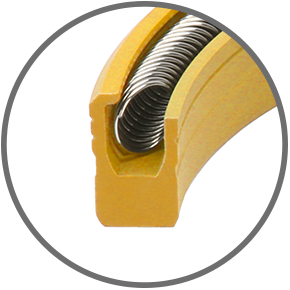
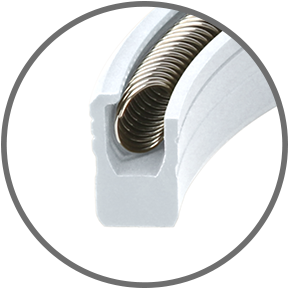
A spring-energized seal jacket can be manufactured from almost any base material. But the unique physical properties and performance characteristics of these polymers make them ideal for sealing service:
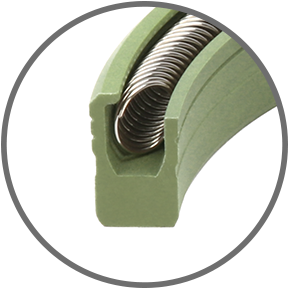
Polytetrafluoroethylene (PTFE)
Excellent chemical resistance, wide temperature range, low friction
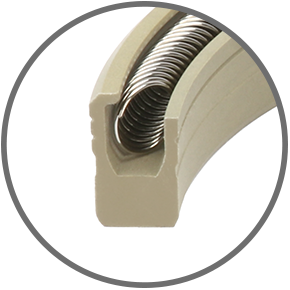
Polyether Ether Ketone (PEEK)
High strength, excellent wear resistance, maintains properties at elevated temperatures
Polyethylene (UHMWPE)
Good chemical resistance, economical option for less demanding applications
Specialty
Polymers
Custom-formulated materials for unique application requirements
These materials can be used in their unfilled (virgin) form, or they can be filled with graphite, carbon, glass, molybdenum disulfide, and various other polymers and additives to enhance performance. They are sintered, and can be machined to very tight tolerances. Filled seal jacket materials significantly outperform virgin materials in harsh, viscous, abrasive, and rigorous operating conditions, and typically deliver longer service life than virgin materials, depending on the type and percentage of filler used.
Seal materials conform to hardware surface irregularities and prevent the formation of leak paths. Click here to learn more about the polymers used to make the Bal Seal® spring-energized seal, and how these materials perform in specific temperatures, pressures, speeds, and media.
Spring Energizer Options
Choosing the right energizer — with the ideal combination of force, fit, and finish — is as critical to the success of a seal’s design as the material itself. Popular energizer components for the spring-energized seal consist of:

Canted Coil Springs
Multiple independent coils provide consistent force across the working deflection range with excellent resistance to compression set

V-Springs
Alternative energizer geometry for specific force-deflection requirements

Helical/Ribbon Springs
Broad, flat coils, providing uniform, continuous radial loading in lower-speed, lower-deflection applications where high temperature resistance or chemical stability are required.
Media resistance, galvanic compatibility, and biocompatibility are key factors that impact the selection of seal energizer materials. Although it’s not uncommon to find energizers made from elastomers and even polymers (such as PEEK), metals are often the more popular choice because they offer greater durability and design flexibility. Metal energizers can withstand higher operating temperatures, resist compression set, and allow for more precise control over a wider range of forces.
Metal Energizer Materials
- Stainless Steel (300 Series): Cost-effective with good corrosion resistance
- MP35N: Biocompatible cobalt-chromium-nickel-molybdenum alloy for medical applications
- Elgiloy: Corrosion-resistant cobalt-chromium alloy
- Hastelloy: Exceptional corrosion resistance in aggressive chemical environments
- Titanium Alloys: Lightweight with excellent strength-to-weight ratio
Energizer selection balances force requirements, temperature range, and galvanic compatibility with hardware materials.
Seals Frequently Asked Questions
Spring-energized seals use a spring energizer that maintains consistent sealing force as the jacket wears, while O-rings rely solely on elastomer compression. This enables spring-energized seals to operate across wider temperature ranges (-425°F to +600°F vs. -65°F to +400°F for most elastomers), resist chemical attack better, and deliver significantly longer service life in demanding applications.
Operating temperature depends on jacket material selection. PTFE-based seals operate from -425°F to +600°F (-254°C to +316°C), PEEK seals function from -100°F to +500°F (-73°C to +260°C), and specialty materials extend capabilities further. Metal spring energizers maintain consistent force across these temperature extremes.
Bal Seal® jackets are precision-machined from PTFE, PEEK, PE (UHMWPE), and specialty polymers. Materials can be used in virgin form or filled with graphite, carbon, glass, or molybdenum disulfide to enhance wear resistance and performance. Our engineers recommend materials based on your temperature, pressure, speed, and chemical compatibility requirements.
Yes, spring-energized seals function effectively in rotary applications including rotating shafts and spindles. Design considerations include surface finish of the rotating hardware, surface speed limitations, heat dissipation, and PV (pressure-velocity) limits. Our engineering team can optimize seal designs for your specific rotary application.
Bal Seal® spring-energized seals operate reliably at pressures up to 10,000 psi (689 bar) and higher when properly designed with appropriate backup rings and anti-extrusion features. Pressure capability depends on seal geometry, installation hardware dimensions, and jacket material properties.
Custom Seal Design
Bal Seal Engineering collaborates with OEMs and tier suppliers to develop custom sealing solutions optimized for specific applications. Our engineering team applies nearly 70 years of experience in material formulation, seal design, and manufacturing to create seals that solve your toughest sealing challenges.
Sping-Energized Seal Experts
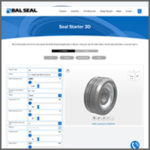
At Bal Seal Engineering, we’ve perfected the process of designing and manufacturing custom spring-energized seals. Our Bal Seal® products are machined from polytetrafluoroethylene (PTFE) and other premium polymers, and energized with precision-engineered Bal Spring® canted coil springs. To learn more, choose your desired application below, or create your own Bal Seal model with our Seal Starter 3D tool.